Note: Consult a doctor for health advice. Check out my favorite health products here: (Amazon Affiliate commission applies)
Glass vs. Plastic Eye Wash Cups: Which is Better for Eye Care
Discover the pros and cons of glass and plastic eye wash cups for your eye care routine.Glass vs. Plastic Eye Wash Cups: Which is Better for Eye Care,best practical uses for each material to keep your eyes safe and healthy.
YOGA AND NATUROPATHY
Rajesh Kumar
3/12/20269 min read
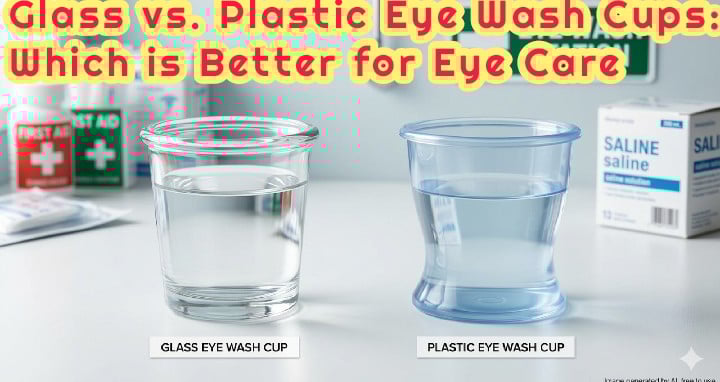
Glass vs. Plastic Eye Wash Cups: Which is Better for Eye Care?
My dear friends, welcome back to our humble corner of the internet dedicated to holistic health and personal well-being. Today, we are focusing on one of our most precious senses: sight.
There is nothing quite as disruptive or frankly alarming as something being wrong with your eyes. Whether it’s the irritating grit of unexpected dust, the sting of an airborne allergen, or the genuine emergency of a chemical splash, we’ve all experienced that moment of panic. The immediate instinct is always the same: get it out.
When this happens, the most common and effective first aid is eye irrigation. While massive, plumbed eye wash stations are mandatory in industrial settings, many people find themselves reaching for a smaller, more intimate device for home use or personal first aid kits: the eye wash cup. These simple, goblet-like tools have been around for a very long time, designed to hold liquid (usually sterile saline or water) against the socket, allowing you to open your eye into the solution and rinse away contaminants.
However, a question frequently arises, dividing the classicists from the modernists: Which is the better choice, glass or plastic eye wash cups?
This might seem like a minor detail, perhaps even a trivial consideration. But when you are dealing with the delicate tissues of the eye, every detail matters. The materials we introduce to our bodies, especially our eyes, have implications for hygiene, safety, chemical stability, and even the environment.
So, let's explore this now, taking a deep dive into the pros, cons, and practical realities of both materials, so you can make an informed, human-centric decision for your own eye care regimen.
The Resurgence of a Classic: The Glass Eye Wash Cup
If you look into the bathroom cabinets of our grandparents or browse through antique medical supplies, you are almost guaranteed to find a glass eye wash cup. They are simple, elegant, and heavy, often looking more like a specialized piece of glassware for a cocktail hour than a medical tool.
In recent years, however, glass eye wash cups have enjoyed a significant resurgence in popularity, driven partly by a cultural shift away from disposable materials and a desire for products that are built to last. Let's look at why they remain a compelling choice and where they fall short.
The Advantages of Glass
Superior Sterilization: This is perhaps the strongest argument in favor of glass. Glass is non-porous and incredibly durable in the face of heat. It can be boiled, autoclaved, or steamed without any risk of melting or degrading. In my experience, when dealing with the potential introduction of fluids into the eye, the reassurance that you have thoroughly sterilized the vessel is invaluable. You know with 100% certainty that you have killed any lingering bacteria or pathogens.
Chemical Inertness: Glass is chemically non-reactive. This means it will not leach any substances into the saline solution or water you place inside it, regardless of how long the liquid sits there (though we always recommend fresh solution). You are washing your eye with exactly what you intend to, with no chemical surprises.
Eco-Friendly and Sustainable: A glass eye wash cup, if properly cared for, can last a lifetime. It is a reusable item in the truest sense. By choosing glass, you are dramatically reducing waste, keeping disposable plastic alternatives out of landfills. For the environmentally conscious individual, this is a significant factor.
Visibility and Clarity: Glass is perfectly transparent. This allows you to easily see the state of the solution inside, check for sediment, and visualize the process as you are doing it, which can offer some peace of mind.
Aesthetic and Tactile Appeal: There is something comforting about the weight and substantial feel of a glass cup. It feels like a genuine, high-quality tool. It sits securely on the eye socket, and the cold sensation of the glass (if stored that way) can sometimes even soothe inflammation on its own.
The Disadvantages of Glass
Fragility: This is the elephant in the room. Glass breaks. If you have soap on your hands in the bathroom, or if you simply fumble the cup while scrambling during an eye emergency, it can shatter. This creates a secondary hazard of broken glass in a space (often bare-footed) where you are already dealing with an eye injury. Furthermore, if you travel with your kit, you have to pack a glass cup very carefully.
Cost: Glass eye wash cups generally have a higher upfront cost than plastic ones. You are paying for the quality, the manufacturing process, and the product's longevity.
Weight: While some like the substantial feel, others might find it cumbersome, particularly if they have limited hand dexterity or are trying to perform eye irrigation while feeling panicked or unwell.
The Modern Challenger: The Plastic Eye Wash Cup
Plastic eye wash cups are ubiquitous today. They are what you typically find included in ready-made first aid kits and are frequently supplied with bottles of sterile saline rinse. They have almost completely replaced glass in professional clinical settings where single-use disposable items are standard. But does that make them better for you at home?
Let's examine the case for and against plastic.
The Advantages of Plastic
Unbeatable Durability: Plastic will not shatter. If you drop it, it bounces. This is a massive advantage in an emergency. The last thing you want when you are already in pain and partially blinded by a chemical splash is the sound of glass breaking. Plastic offers a level of safety during a chaotic situation that glass simply cannot match. This durability also makes it ideal for travel, hiking, or keeping in a vehicle.
Convenience and Sterility (Initially): Plastic cups are often sold in sterile, sealed packaging, sometimes pre-attached to a bottle of eye wash solution. This means you can have a guaranteed sterile cup ready to use instantly, without the need for pre-boiling or sterilization. In an emergency, every second counts, and the "grab-and-go" convenience of a sealed plastic unit is unparalleled.
Low Cost: Plastic eye wash cups are extremely inexpensive. They are often treated as disposable items, making them an accessible option for people on a budget. You can stock multiple kits (home, work, car) with plastic cups for the price of a single glass one.
Lightweight: Plastic cups are very light, making them easy to manipulate and hold in place for extended periods if necessary.
The Disadvantages of Plastic
Concerns About Leaching: This is the main point of contention with plastic. Not all plastics are created equal. While most medical or food-grade plastics are generally safe, there is always the concern of chemicals, such as Bisphenol A (BPA) or phthalates, leaching into the liquid, especially if the cup is exposed to heat or is very old. For someone aiming to minimize their exposure to such compounds, this is a significant worry.
Difficulty to Sterilize for Reuse: Unlike glass, you cannot boil or autoclave most plastic eye wash cups. The heat will warp them or release chemicals. While you can clean them with soap and hot water, achieving a true state of sterilization is difficult, if not impossible. As far as reality is concerned, many plastic cups, particularly the flimsy ones that come in cheap kits, are designed to be single-use. Attempting to reuse them increases the risk of eye infection.
Environmental Impact: Plastic cups contribute to the global plastic waste problem. This is especially true if they are treated as single-use disposables.
Environmental Stress Cracking: Over time, plastic can degrade, especially if exposed to sunlight (UV radiation) or certain cleaning agents. This can lead to tiny cracks (known as crazing or environmental stress cracking) that are invisible to the naked eye but can harbor bacteria and weaken the cup.
The Ultimate Showdown: Practical Comparisons and Considerations
So, we have a classic showdown: The sterilizable but fragile glass vs. the durable but potentially chemical-leaching and disposable plastic. To help you decide, we must look at how these considerations play out in the real world.
Safety in an Emergency
Imagine this scenario: You’ve just splashed some household cleaner in your eye. Your priority is to wash it out now. You reach for your cup.
If it’s glass, you are handling a fragile item in a panicked state, perhaps with wet or shaky hands. If you drop it, you are in trouble.
If it’s plastic, and better yet, if it’s a pre-sealed unit with a saline bottle, you can grab it, break the seal, and start washing immediately. The chance of a secondary injury from broken glass is zero.
In this context, plastic seems like the clear winner. The immediate safety and speed of deployment outrank the long-term chemical or environmental concerns when facing a genuine medical emergency.
Routine Hygiene and Allergies
Now imagine a different scenario: It’s pollen season, and you just want to do a daily rinse to keep the irritation at bay. You are not in a panic; you have time to prepare.
In this context, the calculus changes completely. You can take the time to boil a glass cup, ensuring it is perfectly sterile. You can use your own preferred high-quality saline. The slight extra effort is worth the peace of mind that you are not exposing your eye to chemicals, and you feel good about not creating waste. Glass wins here.
Long-Term Value vs. Cost
A glass cup is an investment; a plastic cup is a consumable. If you buy a glass cup for $20 and use it regularly for 10 years, it’s a bargain. If you buy 50 plastic cups (or kits containing them) over that same period for $100, you have spent more money and created a lot of waste. However, the upfront cost of plastic is very low, making it accessible to more people.
Making Your Decision: A Context-Driven Approach
The "better" choice is not about the material itself; it’s about the situation and your personal priorities.
Without taking up any more time, let's proceed to my practical recommendations:
Why You Should Choose Glass (The Purest Approach)
You prioritize long-term hygiene and the ability to achieve total sterilization.
You are concerned about chemical leaching and want a purely non-reactive material.
You want a sustainable, eco-friendly product and are happy to commit to a reusable item.
You are buying a cup for routine, non-emergency use (e.g., daily pollen rinse).
You appreciate products that are beautifully made and feel like a serious tool.
Why You Should Choose Plastic (The Safety First Approach)
You are putting together an emergency first aid kit where speed and safety are paramount.
The cup will be stored in a vehicle, hiking pack, or shared workshop where fragility is a major issue.
You need an affordable option and would prefer to buy multiple kits for different locations.
You prefer the guaranteed "out-of-the-box" sterility of a sealed disposable item.
You have limited dexterity and are worried about dropping a glass cup.
My Recommendation: A Combined Strategy
My dear friends, this doesn't have to be an all-or-nothing choice. The ideal approach might be a combination.
1. The Emergency Kit: In your main home first aid kit and in every vehicle or "go-bag," you should have a sealed, sterile bottle of eye wash solution that comes with its own plastic cup. This is for the "Oh, no!" moment. You don’t want to be sterilizing a glass cup during a chemical burn. Plastic is the superior choice for emergency response.
2. The Daily Routine: For your daily hygiene, allergy relief, or routine cleaning, invest in one high-quality glass eye wash cup. Keep it in your bathroom cabinet. Develop a ritual around it. In my experience, taking that extra minute to properly sterilize it and do a clean rinse feels like a profound act of self-care. It’s better for your eye, and it’s better for the planet.
Beyond the Material: Safe Practices for Any Cup
Whichever cup you choose, the rules for safe eye washing remain the same.
Sterility is Non-Negotiable: If you use glass, you must sterilize it before every single use by boiling it for at least 10 minutes. If you use plastic, ideally use a single-use disposable cup from a sterile seal. If you must reuse a plastic cup (and please, only do this with very sturdy, high-quality ones), clean it with soap and hot water, rinse thoroughly, and know that it is merely "clean," not "sterile." Replace reusable plastic cups regularly.
Use the Right Fluid: Never use regular tap water to rinse your eyes, as it contains bacteria, chlorines, and other minerals that can irritate or infect. Only use sterile saline solution, sterile water for irrigation, or a solution specifically labeled for eye washing.
Check for Expiration: Both your sterile solutions and any sealed plastic kits have expiration dates. Check them regularly and replace them. The sterility of that plastic bottle and cup is not eternal.
Technique Matters:
Fill the cup about half-full.
Leaning your head forward, press the rim of the cup securely and comfortably against your eye socket.
While keeping a tight seal, slowly tilt your head back.
Open your eye fully. It’s hard, but try. Blinking is fine, as it circulates the liquid, but keep your eye "in" the water.
Roll your eye in large circles—up, down, left, right—to allow the liquid to flush the entire surface.
Tilt your head forward again to remove the cup and discard the liquid. Never reuse the liquid.
Listen to Your Body: If after flushing your eye you still feel pain, redness, persistent blurry vision, or feel like something is still in it, do not keep washing. Seek medical attention immediately. An eye wash cup is first aid, not a cure-all.
Final Thoughts
The decision between glass and plastic eye wash cups is a microcosm of the larger choices we make in our lives: convenience and immediate safety vs. long-term quality, sustainability, and purity. There is no wrong answer, only a contextual one.
I hope this detailed examination helps you make the right choice for you and your family. Your vision is a truly miraculous gift, and it deserves the highest level of care and consideration.
My dear friends, take care of yourselves, and take care of your eyes. They are, quite literally, your windows to the world.
Contact
Reach us to book your wellness session
Email - rajnaturcure@gmail.com
© 2025. All rights reserved.