Note: Consult a doctor for health advice. Check out my favorite health products here: (Amazon Affiliate commission applies)

High-Density Foam Rollers vs. Wooden Acupressure Rollers
Discover the differences between high-density foam rollers and wooden acupressure rollers for effective back pain relief. Join me as I share personal experiences, awkward stories, and tips to help you choose the right tool for your home gym.High-Density Foam Rollers vs. Wooden Acupressure Rollers
MASSAGE THERAPY
Rajesh Kumar
4/2/20267 min read
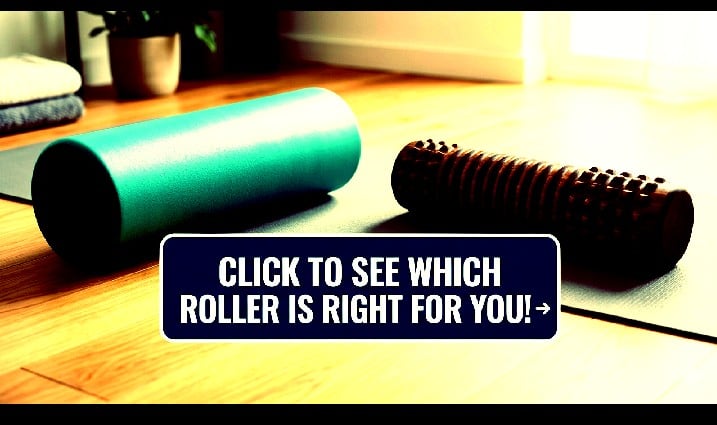
My dear friends, I have spent a lot of time lately rolling around on my living room floor. It’s not because I’ve lost my mind, though my dog certainly looks at me like I have. No, I’ve been on a mission to fix this nagging tightness in my lower back and shoulders. If you’ve ever sat at a desk for eight hours straight or pushed yourself a bit too hard at the gym, you know exactly what I’m talking about. Your muscles start to feel like they’ve been tied into knots by a very angry sailor.
So, I decided to dive deep into the world of recovery tools. I’ve tried everything. But today, I want to settle a debate that’s been brewing in my own mind and among my fitness-loving buddies. We are talking about the classic battle: High-Density Foam Rollers vs. Wooden Acupressure Rollers. Without further ado, let's proceed into the nitty-gritty of which one might actually save your sore muscles.
Finding the Right Vibe with High-Density Foam Rollers
When I first started looking into muscle recovery, the high-density foam roller was the first thing everyone recommended. It’s basically the "gold standard" in most gyms. You’ve seen them. They usually look like giant, oversized pool noodles, often in black or blue. In my experience, these are the best starting point for anyone who isn't quite ready to embrace the "pain is gain" lifestyle just yet.
High-density foam is usually made from a material called EPP (Expanded Polypropylene). It’s tough, but it has a tiny bit of give. I feel that this "give" is crucial. When you lay your full body weight onto a foam roller, it compresses just enough to contour to your body. It doesn't feel like you're laying on a concrete pipe. I remember the first time I used one on my IT bands—that’s the strip of muscle on the side of your leg. I thought I was going to see stars! But because it was foam, I could breathe through it.
I have observed that foam rollers are amazing for what people call "general maintenance." If you just want to flush out some lactic acid after a jog or wake up your muscles in the morning, the foam roller is your best pal. It covers a lot of surface area quickly. You can roll your entire back in about thirty seconds. It’s efficient, it’s relatively cheap, and it doesn’t look scary sitting in the corner of your bedroom.
The Intense Pressure of Wooden Acupressure Rollers
Now, let's switch gears. Let's explore this now: the wooden acupressure roller. As far as reality is concerned, these are a completely different animal. If the foam roller is a firm handshake, the wooden roller is a deep-tissue massage from someone with very strong thumbs. These rollers are usually made of solid wood like beech or maple. Instead of a smooth surface, they often feature ridges, knobs, or spikes designed to dig into specific spots.
I’ll be honest with you. The first time I tried a wooden roller, I let out a sound that I didn't know I could make. It was a mix of a gasp and a whimper. Why? Because wood doesn't give. Not even a millimeter. When you hit a knot with a wooden acupressure roller, you are going to feel it.
But here’s the thing I’ve learned: sometimes that intensity is exactly what you need. I have a specific spot right under my shoulder blade that a foam roller just can’t reach. It’s too deep. The foam just squishes over the top of it. But the wooden roller? It finds that knot and stays there. It applies a type of "pinpoint" pressure that feels almost surgical. If you are dealing with chronic "trigger points"—those tiny, pea-sized balls of tension—wood is often the only thing that gets the job done.
Choosing the Best Tool for Muscle Recovery
So, you’re probably wondering, "Which one should I actually buy?" Well, I feel that the answer depends entirely on your pain tolerance and what you’re trying to achieve. In my experience, if you are a runner or someone who does a lot of cardio, you might prefer the high-density foam roller. Your muscles are likely tired and inflamed. They need a gentle "flushing" motion to get the blood flowing and the waste products out. Putting a hard wooden spike into a super-inflamed calf muscle might actually do more harm than good.
On the other hand, if you do a lot of heavy lifting or if you’re a "body worker" who carries a lot of physical stress, the wooden acupressure roller is a game-changer. I have observed that people who are very flexible or have a lot of muscle mass often find foam rollers "boring." They don't feel anything. For them, the wood provides the necessary resistance to actually make a change in the muscle tissue.
I have a friend, Sarah, who is a marathon runner. She swears by her foam roller. She uses it every single night while watching TV. To her, it’s a relaxation ritual. Then there’s my brother, who does CrossFit. He thinks foam rollers are "pillows for your legs." He uses a wooden roller with little spikes on it. He says it’s the only thing that keeps his back from locking up after heavy squats. It really is a "different strokes for different folks" kind of situation.
Understanding Deep Tissue Massage and Trigger Points
Let’s talk a little bit about the science, but let’s keep it simple. As far as reality is concerned, both of these tools are trying to do the same thing: Self-Myofascial Release (SMR). Your muscles are wrapped in a thin layer of "skin" called fascia. Sometimes that fascia gets stuck to the muscle, or it gets bunched up. This creates those painful knots we all hate.
A foam roller works by using "low-load, long-duration" pressure. It stretches the fascia globally. Imagine trying to smooth out a wrinkled tablecloth with your palm. That’s the foam roller.
The wooden acupressure roller is more like using a spoon to get a specific stain out of that tablecloth. It focuses all the energy on one tiny point. This is what we call "trigger point therapy." By pressing hard on a knot, you actually cut off the blood flow for a second. When you release the pressure, blood rushes back into the area, carrying fresh oxygen and nutrients. This "restarts" the muscle, in a way. I feel that this is why the wooden roller feels so amazing after you finish. The process might be a bit painful, but the relief afterward is incredible.
Comparing Durability and Portability for Your Home Gym
Let’s get practical for a second. My dear friends, we all have limited space in our homes. When I was building my little "recovery corner," I had to think about where these things would live.
High-density foam rollers are light. You can toss one in your gym bag or even take it on a road trip without thinking twice. However, they don't last forever. I have observed that over a year or two of heavy use, foam rollers can start to "bow" in the middle. They lose their perfect cylindrical shape. Sometimes the surface starts to flake off if you have a cat who thinks it’s a giant scratching post (ask me how I know).
Wooden rollers, however, are basically heirloom items. You could probably leave a wooden roller in your will to your grandchildren. They don't wear out. They don't lose their shape. You can wipe them down with a damp cloth, and they look brand new. The downside? They are heavy. If you drop a wooden roller on your toe, you’re going to have a very bad day. They also aren't exactly "travel-friendly" unless you have a lot of extra room in your suitcase.
Addressing Back Pain Relief and Safety
If you are looking specifically for back pain relief, I want to give you a little warning. Please, be careful! I have observed that people often get over-ambitious and try to roll their lower back with a wooden roller right away. In my experience, this can be a mistake. Your lower back doesn't have the protection of a ribcage. If you press too hard with wood against your spine or your kidneys, it can be really uncomfortable or even dangerous.
For the lower back, I almost always recommend starting with a high-density foam roller. It’s wider and softer, so it distributes the pressure across your whole back rather than putting it all on your vertebrae. Once you’ve loosened up the muscles around the spine with foam, then maybe you can use a smaller wooden tool to target the specific knots in your upper back or shoulders.
I feel that safety is often overlooked in the "no pain, no gain" world of fitness. You should feel a "good hurt"—that satisfying release. You should never feel sharp, stabbing pain or numbness. If you do, stop immediately!
My Final Verdict on the Roller Rivalry
Without further ado, let's proceed to the final conclusion of my little experiment. If I could only keep one, which would it be?
It’s a tough call, but if I’m being honest, I use my high-density foam roller more often. It’s my "everyday" tool. It’s easy to use when I’m tired, and it never feels like a chore. It’s like a good pair of sneakers—reliable and comfortable.
However, I would never give up my wooden acupressure roller. It’s my "heavy artillery." When I have a knot that just won't budge, the foam roller is useless. I need the wood to get in there and break things up.
So, here is my advice to you, my dear friends: if you are just starting out, buy a high-density foam roller. It’s a small investment that will pay off immediately. You’ll feel better, you’ll sleep better, and your muscles will thank you. But, if you’ve been using foam for a while and you feel like you’ve hit a plateau—or if you have those stubborn, deep-seated knots—give wood a try. Just remember to breathe!
At the end of the day, the best tool is the one you actually use. Whether it’s foam or wood, just get on the floor and start rolling. Your body does so much for you every day; it deserves a little bit of TLC in return. Happy rolling, everyone!
Contact
Reach us to book your wellness session
Email - rajnaturcure@gmail.com
© 2025. All rights reserved.