Note: Consult a doctor for health advice. Check out my favorite health products here: (Amazon Affiliate commission applies)
Hydrotherapy & Hot/Cold Compress Gear
Discover the simple and cozy world of hydrotherapy with home remedies. Learn how basic temperature control can help ease your body’s aches and pains, all from the comfort of your living room.Hydrotherapy & Hot/Cold Compress Gear
YOGA AND NATUROPATHY
Rajesh Kumar
4/6/20267 min read
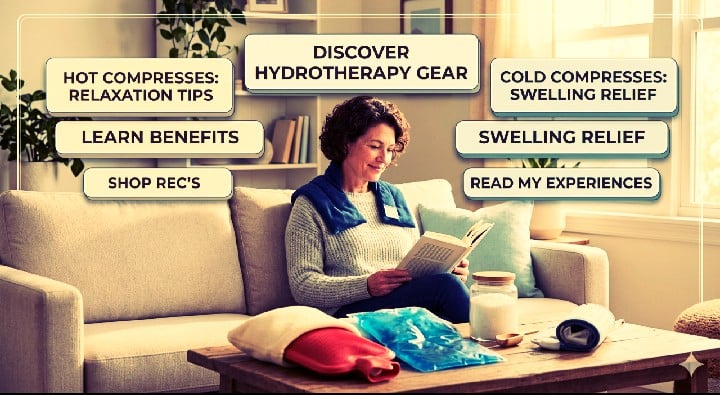

My dear friends, I have a little confession to make. Last Tuesday, I tried to keep up with my nephew at the local park, and let’s just say my lower back decided it wasn't having any of it. I hobbled home, feeling every bit of my age, and headed straight for the freezer. As I sat there with a bag of frozen peas pressed against my spine, I started thinking about how much we rely on these simple fixes.
Whether it’s a steaming hot shower after a long day or a chilled pack on a swollen knee, water and temperature are basically nature’s original doctors. In my experience, we often overlook the most basic tools in our wellness kit because they aren't flashy or expensive. But as far as reality is concerned, a good hot or cold compress can do more for your comfort than a cabinet full of fancy creams. Without further ado, let’s proceed and talk about the wonderful world of hydrotherapy and the gear that makes it work.
The Simple Magic of Water Healing
I feel that we sometimes overcomplicate health. We look for the newest gadget or the latest supplement, but hydrotherapy has been around since, well, forever. It’s just a fancy word for using water to help your body feel better. I have observed that most people do this every day without even realizing it. When you jump in a hot bath to relax your muscles, you’re practicing hydrotherapy. When you splash cold water on your face to wake up, that’s hydrotherapy too!
The cool thing about using water is how it interacts with our blood flow. I’ve noticed that when I use heat, my skin gets a little flushed and my muscles feel like they’re melting in the best way possible. That’s because heat opens up your blood vessels. It brings all that good, oxygen-rich blood to the area to help things heal. Cold does the opposite; it shrinks things down and numbs the pain. It’s like a natural "off" switch for inflammation.
Why Your Body Loves a Good Heat Pack
Let’s explore this now: why does heat feel so stinking good? I remember my grandmother always had this old, red rubber hot water bottle. She’d fill it up from the kettle, wrap it in a fuzzy towel, and tuck it under her covers. I used to think it was just a "grandma thing," but then I tried it during a particularly cold winter. In my experience, there is nothing quite like that steady, radiating warmth to settle a nervous stomach or a tight muscle.
Modern heat gear has come a long way since the red rubber bottle, though those still work great! Today, we have electric heating pads with ten different settings and microwaveable packs filled with flaxseed or lavender. I prefer the weighted ones myself. I feel that the extra weight helps the heat really sink into the tissue, especially around the shoulders where we all carry so much stress.
If you’re dealing with something like chronic arthritis or just general stiffness, heat is your best friend. It’s like oiling a rusty hinge. It gets things moving again. I have observed that if I use a heat wrap for twenty minutes in the morning, my joints don't "click" nearly as much throughout the day.
Chilling Out with Cold Compress Gear
Now, let’s talk about the chilly side of things. My dear friends, I know nobody likes being cold, but sometimes it is exactly what the doctor ordered. I’ll never forget the time I tripped over my own feet while jogging. My ankle puffed up like a balloon within minutes. My first instinct was to grab a heating pad, but a physical therapist friend stopped me. She told me, "When it’s red and angry, give it the cold shoulder."
Cold compress gear is a lifesaver for new injuries. If you just bumped your head or twisted something, you want to get the ice on there fast. It stops the swelling before it gets out of hand. These days, you don't have to deal with leaky bags of ice cubes that make a mess everywhere.
The best gear I’ve found lately are the "clay-based" cold packs. Unlike the old blue gel ones that turn into a hard brick in the freezer, the clay stays flexible. You can wrap it around your wrist or your ankle, and it actually touches your skin everywhere it needs to. I feel that this flexibility makes a huge difference in how fast you find relief.
Finding the Best Hydrotherapy Tools for Home
When you start looking for gear, it can feel a bit overwhelming. There are so many options! But keep it simple. You don’t need a professional-grade spa setup in your bathroom.
In my experience, a few key pieces will cover almost every situation:
A High-Quality Electric Heating Pad: Look for one with an automatic shut-off feature. I’ve fallen asleep on mine more than once, and you definitely don't want to wake up with a "toastier" back than you bargained for!
A Pair of Flexible Cold Packs: I suggest keeping two in the freezer. That way, when one starts to warm up, you can swap it out for a fresh one without waiting.
Moist Heat Wraps: These are often filled with beads that soak up moisture from the air. When you microwave them, they release a "wet" heat. I have observed that moist heat feels much more intense and soothing than the "dry" heat from an electric coil.
Epsom Salts: Okay, this isn't "gear" per se, but you can't talk about hydrotherapy without them. Adding these to a warm bath helps your muscles soak up magnesium. It’s a total game-changer for sleep.
When to Flip the Switch Between Hot and Cold
This is where people usually get confused. Should I use ice? Should I use heat? Let’s explore this now so you never have to guess again.
As far as reality is concerned, the rule of thumb is pretty easy: Ice for Injuries, Heat for Aches.
If you just did something to yourself—like a sudden "ouch" moment—go for the cold pack. Use it for the first 48 hours. This keeps the inflammation down. I feel that if you use heat too early on a fresh injury, you might actually make the swelling worse because you’re encouraging more blood to flow to an area that’s already overwhelmed.
After those first two days, or if you’re just dealing with a muscle that feels tight from sitting at a desk all day, switch to heat. The warmth will relax the fibers and help you stretch out. Sometimes, I like to do what the pros call "contrast therapy." This is just a fancy way of saying you switch back and forth. You do three minutes of heat, then one minute of cold. It’s like a workout for your veins! It pumps the blood in and out, which can really speed up recovery. I’ve tried this after heavy leg days at the gym, and it works wonders.
Taking Care of Your Gear
If you’re going to invest in some good compresses, you want them to last. I have observed that most people just toss their heating pads in a corner or leave their ice packs at the bottom of the freezer under a bag of frozen corn.
Treat your gear with a little love! For electric pads, make sure you don't bunch up the wires, as that can cause "hot spots" or even shorts in the system. For cold packs, I always keep mine in a sealed Ziploc bag in the freezer. This prevents them from picking up that weird "freezer smell" or getting stuck to a box of waffles.
Also, always check the covers. Most modern gear comes with a removable, washable sleeve. Please, my dear friends, wash those sleeves! Sweat and skin oils can build up over time, and a clean wrap just feels better against your skin.
Safety First, Comfort Second
I have to mention a quick safety tip because I care about you guys. Never put a hot or cold pack directly on your bare skin for too long. I’ve seen people get "ice burns" or little heat blisters because they were too focused on the relief and didn't notice the temperature was too extreme.
Always use a thin towel or the fabric cover that came with the gear. A good rule is "20 minutes on, 20 minutes off." This gives your skin a chance to return to normal temperature and prevents any damage. In my experience, more isn't always better. Your body needs that break to process the treatment.
A Personal Note on Healing
I feel that we often live such fast-paced lives that we forget to listen to what our bodies are screaming at us. When we feel a nag in our neck or a throb in our knee, our first thought is often to just "push through it." But taking twenty minutes to sit quietly with a warm compress isn't just about the physical heat. It’s about giving yourself permission to rest.
I have observed that the mental relaxation that comes with hydrotherapy is just as important as the physical part. When I wrap a warm pack around my neck, I can feel my heart rate slow down. I breathe a little deeper. It’s a small ritual that says, "Hey, I’m taking care of myself."
So, the next time you’re feeling a bit run down or you’ve pushed yourself a little too hard in the garden, don't reach for the medicine cabinet right away. Instead, head to the kitchen or the linen closet. Grab your gear, find a comfy spot on the couch, and let the water—in whatever form you choose—do its thing.
My dear friends, your body does so much for you every single day. It carries you through your chores, your walks, and your big life moments. The least we can do is give it a little temperature-controlled TLC every now and then. Whether it’s the biting chill of a fresh ice pack or the hugging warmth of a heating wrap, these simple tools are truly some of the best companions we can have on our journey to feeling great.
Let's make sure we keep these simple remedies in our "life toolbox." They’ve worked for centuries, and they’ll keep working as long as we’re around to use them. Stay comfortable, stay active, and don't forget to chill out (or warm up) when you need to!
Contact
Reach us to book your wellness session
Email - rajnaturcure@gmail.com
© 2025. All rights reserved.