Note: Consult a doctor for health advice. Check out my favorite health products here: (Amazon Affiliate commission applies)

Reusable Hot and Cold Gel Packs for Knee Injury Recovery
Stop struggling with knee pain! Discover how reusable hot and cold gel packs can expedite your injury recovery. Learn effective tips to replace frozen peas and heal swelling and stiffness faster.Reusable Hot and Cold Gel Packs for Knee Injury Recovery
YOGA AND NATUROPATHY
Rajesh Kumar
4/14/20267 min read
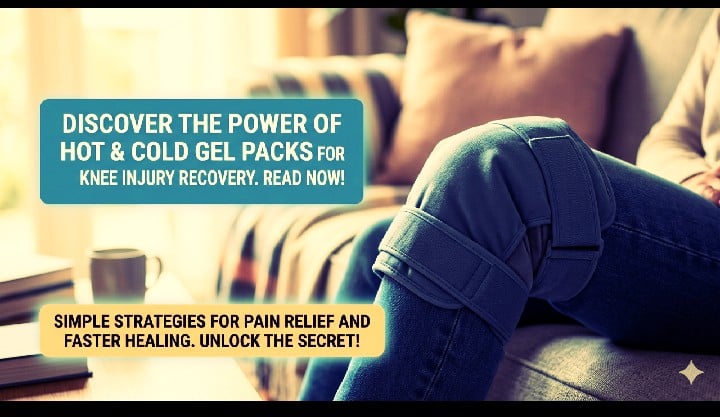

My dear friends, have you ever woken up, stepped out of bed, and felt that sharp, nasty "pop" in your knee? Or maybe you’ve spent a whole Saturday working in the garden, only to realize by dinner time that your joints feel like they’ve been filled with concrete. I have observed so many people just "powering through" the pain, but let me tell you, that is a one-way ticket to a much longer recovery time. We use our knees for everything. We use them to walk the dog, climb the stairs, and even just to stand up from the couch to grab the remote. When they start acting up, life gets small really fast.
As far as reality is concerned, a bad knee can make you feel a lot older than you actually are. I feel that we often overlook the simplest fixes because we think we need some high-tech gadget or a fancy surgery to feel better. But in my experience, one of the most effective tools in your toolkit is sitting right there in your freezer or your microwave. I’m talking about those handy reusable hot and cold gel packs. Without further ado, let’s proceed and talk about why these things are absolute lifesavers for your knee injury recovery.
Why Reusable Gel Packs Save the Day for Your Knees
Let's explore this now: why choose a gel pack over a simple bag of frozen peas? I used to be a "frozen peas" kind of person. I’d grab a bag of Birdseye, wrap it in a thin dish towel, and hope for the best. But here is the problem. Peas melt. They get mushy. Eventually, you end up with a soggy bag of gross vegetables that you definitely can't eat later. Plus, they don't really hold their temperature for long.
A reusable gel pack is a completely different story. These packs use a special type of non-toxic gel that stays flexible even when it’s freezing cold. This is huge for a knee injury. Your knee isn't a flat surface like your back or your chest. It’s all bumps, bones, and weird angles. You need something that can wrap around the kneecap and get into those side ligaments where the pain actually lives. I have observed that when a pack contours to your body, you get way more relief. It actually touches the skin (through a cover, of course!) and pulls the heat out of the injury much faster.
I remember when my neighbor, Jerry, twisted his knee playing pickleball last summer. He tried using ice cubes in a plastic bag. He spent more time cleaning up the water that leaked onto his carpet than he did actually icing his leg. I finally walked over and handed him one of my pro-grade gel packs with the Velcro straps. He looked at me like I’d just handed him a pot of gold. The straps let him keep the pack tight against his skin while he sat back and watched the game. That’s the kind of convenience we’re looking for.
The Magic of Cold Therapy for Recent Knee Hits
When you first hurt your knee—maybe you tripped on a curb or overextended it at the gym—your body goes into "red alert" mode. It sends a ton of blood and fluid to the area. This causes that tight, throbbing swelling we all hate. This is where cold therapy comes in. I feel that the first 48 to 72 hours are the most critical time for using cold.
When you put a cold gel pack on a fresh injury, it narrows your blood vessels. This slows down the blood flow and calms the swelling. It also numbs the nerves. If you've ever had that "stabbing" feeling in your joint, you know how much of a blessing a little numbness can be. In my experience, icing the knee for 20 minutes every couple of hours during those first two days can shave days off your total recovery time.
Let's get straight to the point: don't overdo it. You might think that if 20 minutes is good, two hours is better. It isn't. If you leave a frozen pack on your skin for too long, you risk getting frostbite or damaging your tissues. Always use a sleeve or a towel. I’ve seen people put the ice pack directly on their bare skin, and they end up with a nasty red burn that hurts worse than the original injury. Don't be that person! Use the cold to manage the "angry" stage of the injury.
When to Warm Up Your Recovery with Heat
Now, let's talk about the other side of the coin. Once that initial swelling goes down, or if you’re dealing with a chronic issue like arthritis or an old "football injury" from high school, heat is your best friend. My dear friends, heat does the exact opposite of cold. It opens up the blood vessels. This brings a fresh supply of oxygen and nutrients to the area, which helps the tissues heal.
I feel that heat is especially great for stiffness. You know that feeling in the morning when your knee feels like a rusty hinge? A warm gel pack can loosen that right up. I have observed that using heat before you try to do your physical therapy exercises makes a world of difference. It warms up the muscles and tendons, making them more pliable. It’s like warming up a piece of taffy so you can stretch it without it snapping.
Most reusable gel packs are "dual-purpose." You can toss them in the microwave for thirty seconds or a minute, and they stay warm for a long time. I usually suggest the "heat sandwich." Put a warm pack on the front of your knee and another one on the back. It feels like a spa treatment for your joints. Just remember to check the temperature with your hand before you strap it onto your knee. Microwaves can have "hot spots," and you don't want to burn yourself.
Getting the Most Out of Your Reusable Packs
If you want to get back on your feet quickly, you have to be consistent. I have observed that people use their gel pack once, feel a little better, and then throw it back in the drawer and forget about it. Recovery doesn't work like that. You have to stay on top of it.
I like to follow the "20 on, 20 off" rule. Whether you are using heat or cold, give your skin a break. This gives your body time to react to the therapy. Also, elevation is a big deal. While you have that pack strapped to your knee, prop your leg up on a couple of pillows. You want your knee to be higher than your heart. This helps the fluid drain away from the joint.
In my experience, buying two packs is the way to go. That way, you can always have one in the freezer ready to go while you’re using the other one, or you can use both at once for "total coverage." It's a small investment, but as far as reality is concerned, it's a lot cheaper than a trip to the doctor for something that could have been handled at home.
Why Reusable is Better Than the Old School Ways
We’ve already talked about why gel packs beat a bag of peas, but what about those instant chemical "snap" packs? You know the ones—you squeeze them, a chemical reaction happens, and they get cold for about ten minutes. Those are fine for an emergency in a first aid kit, but for real recovery, they’re pretty useless. They don't get cold enough, they don't last long, and you have to throw them away after one use. It’s a waste of money and bad for the planet.
Reusable gel packs are tough. You can use them hundreds of times. I’ve had some of mine for years. They are built with heavy-duty plastic or fabric covers that don't leak. If you get a high-quality one with a soft fabric backing, it feels much nicer against your skin than a piece of cold plastic.
I also feel that the weight of the gel pack helps. It provides a tiny bit of "compression," which is another key part of the healing process. When you strap that pack on, you’re hitting two birds with one stone: temperature therapy and compression. My dear friends, efficiency is the name of the game when you just want to get back to your normal life.
Real Life Recovery Stories
I have a friend named Sarah who loves to run marathons. A few months ago, she developed a nasty case of runner's knee. She was devastated because she thought she would have to sit out her next big race. She started a strict routine with her reusable gel packs. She would ice her knee immediately after every short training run to keep the inflammation down. Then, in the evenings while she was reading or watching TV, she would use heat to keep the blood flowing and the muscles relaxed.
She told me that the gel packs were the only reason she stayed sane. They gave her a way to manage her pain without constantly taking ibuprofen or other pills. By the time race day came around, her knee felt stable and strong. She didn't break any world records, but she finished the race with a smile on her face. That’s the power of taking care of your body with the right tools.
I have observed similar results with my uncle, who had a total knee replacement last year. His doctor told him that managing the swelling was the most important part of his physical therapy. He lived with his gel packs for three months. They helped him get through those tough early days when even moving an inch felt like a chore. He’s back to golfing now, and he still uses a cold pack after eighteen holes just to keep things "quiet" in his joint.
Final Thoughts on Knee Health
Your knees are the foundation of your movement. When they hurt, everything hurts. But you don't have to just sit there and suffer. Whether you are dealing with a brand-new injury or a "cranky" joint that’s been bothering you for years, reusable hot and cold gel packs are a simple, honest solution. They are easy to use, they don't cost a fortune, and they actually work.
I feel that we should all have a couple of these in our house, just in case. It’s like having a spare tire for your car. You hope you don’t need it, but you sure are glad it’s there when things go sideways. So, take care of those knees. Listen to what they are telling you. If they are screaming for a little TLC, give them the hot or cold treatment they deserve. You’ll be back to walking, running, and jumping before you know it.
Thanks for sitting down and chatting with me about this today. I really hope this helps you or someone you love get back on their feet. Don't let a "bum knee" keep you on the sidelines! Get those gel packs ready, and let the healing begin.
Contact
Reach us to book your wellness session
Email - rajnaturcure@gmail.com
© 2025. All rights reserved.